
DRIFTWOOD RANCH
Location: Driftwood, Texas
Design Team: Troy Miller, Philip Keil, Alex Gagle, Dave Birt, Drew Wilson
Contractor: Risher Martin
Structural Engineer: Fort Structures
Landscape Design: Campbell Landscape Architecture
Interior Design: Charyl Coleman
Photographer: Casey Dunn
Despite Texas’s mythical reputation as a wide-open frontier, there are not very many places left in the central Texas Hill Country that retain their wild natural character. This 100-acre “micro-ranch” is a rare exception, part of a larger parcel of un-sullied oak savannah and rugged limestone landscape just southwest of Austin. The property is in an ecologically sensitive watershed and is protected by a strict conservation easement, limiting development to retain the land’s vital role in preserving the water quality, rural character, and diverse wildlife of the region.
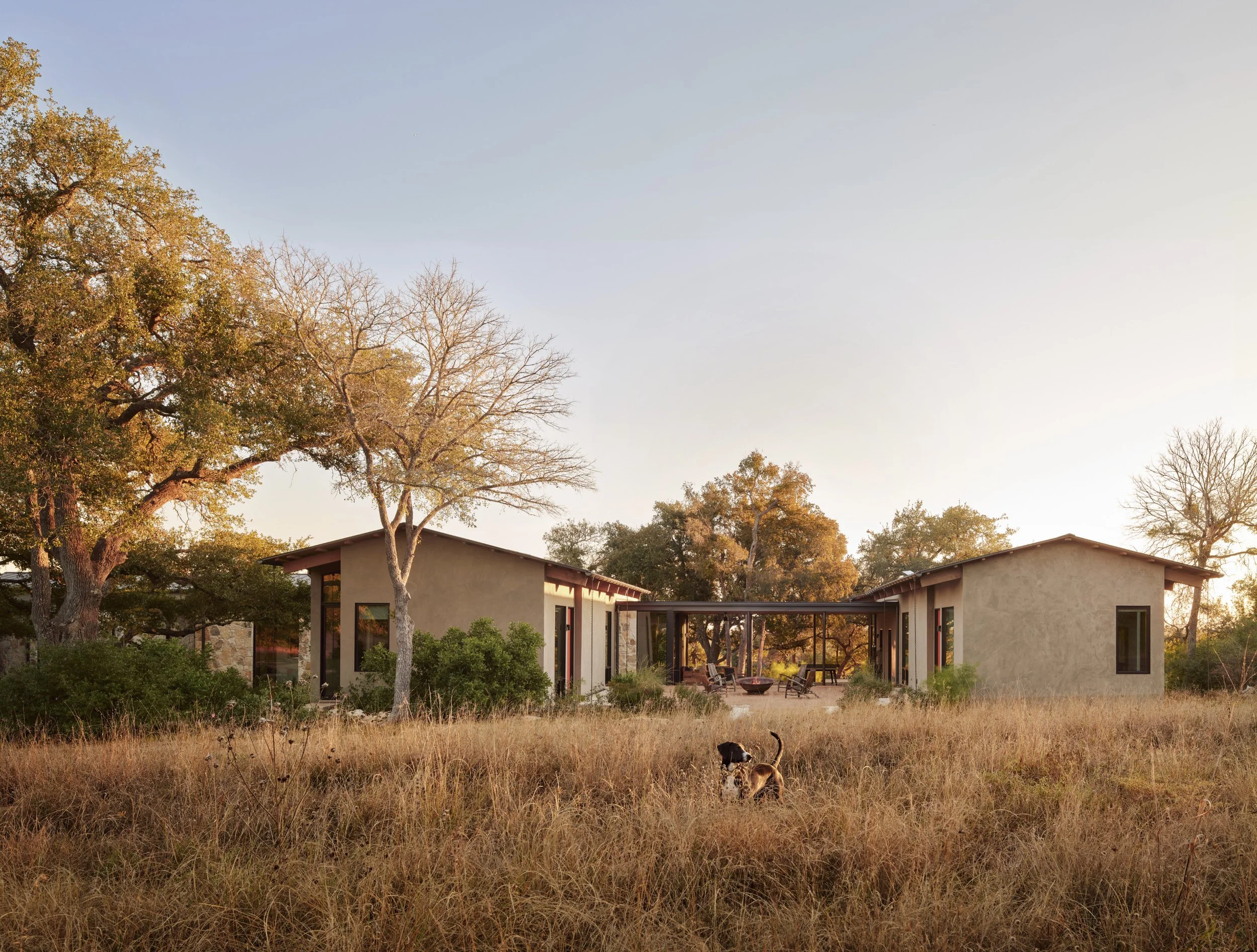
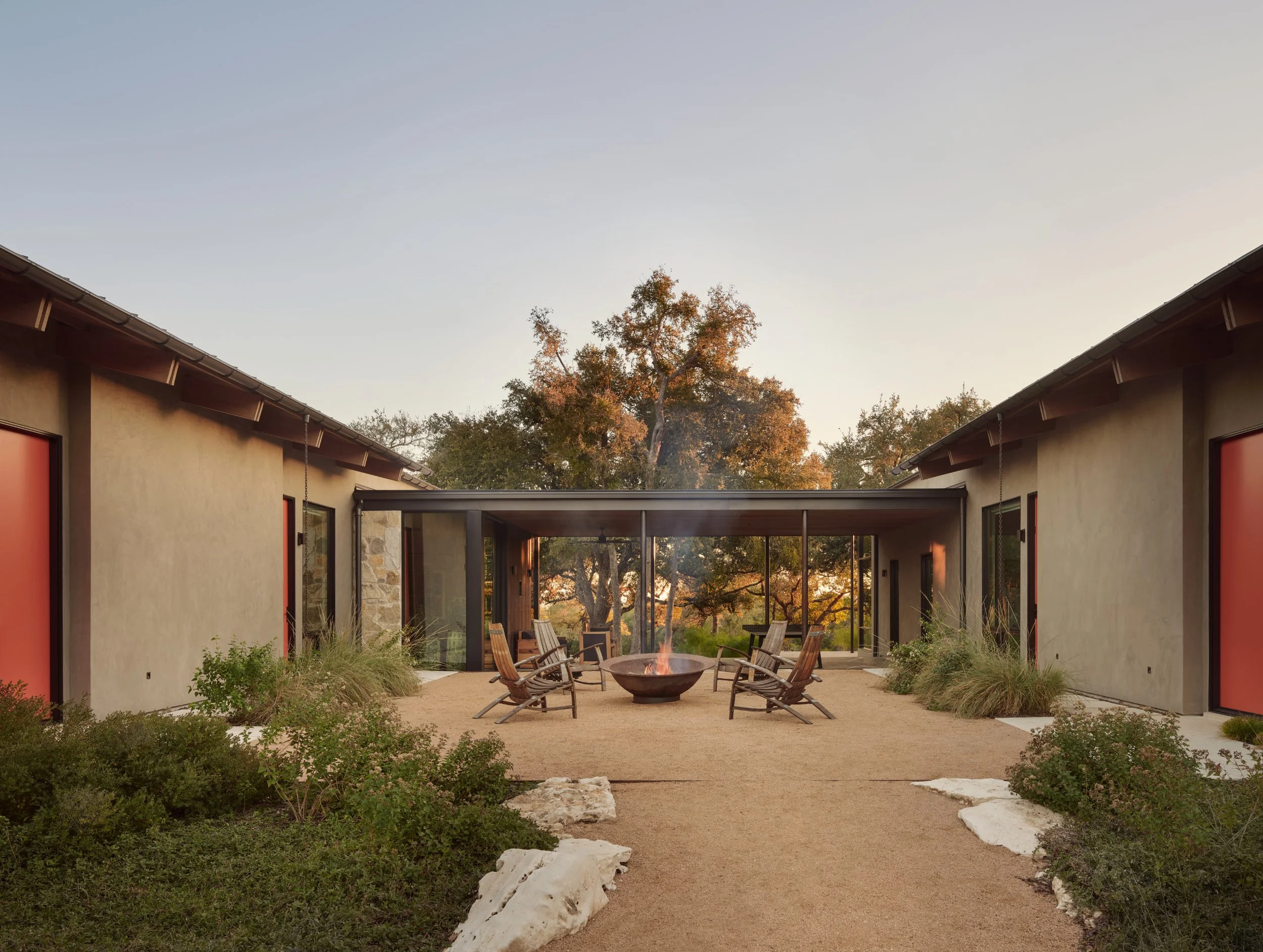
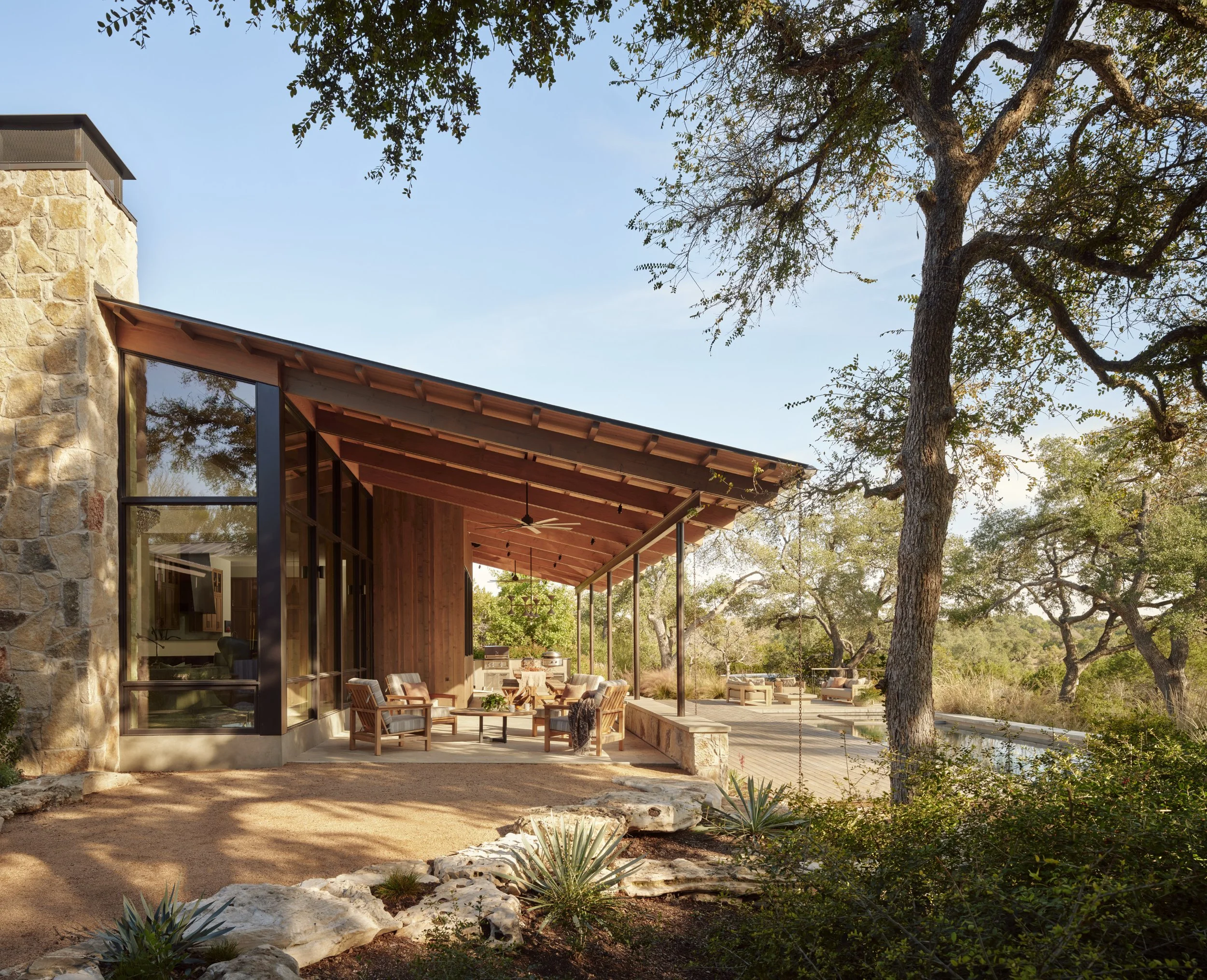
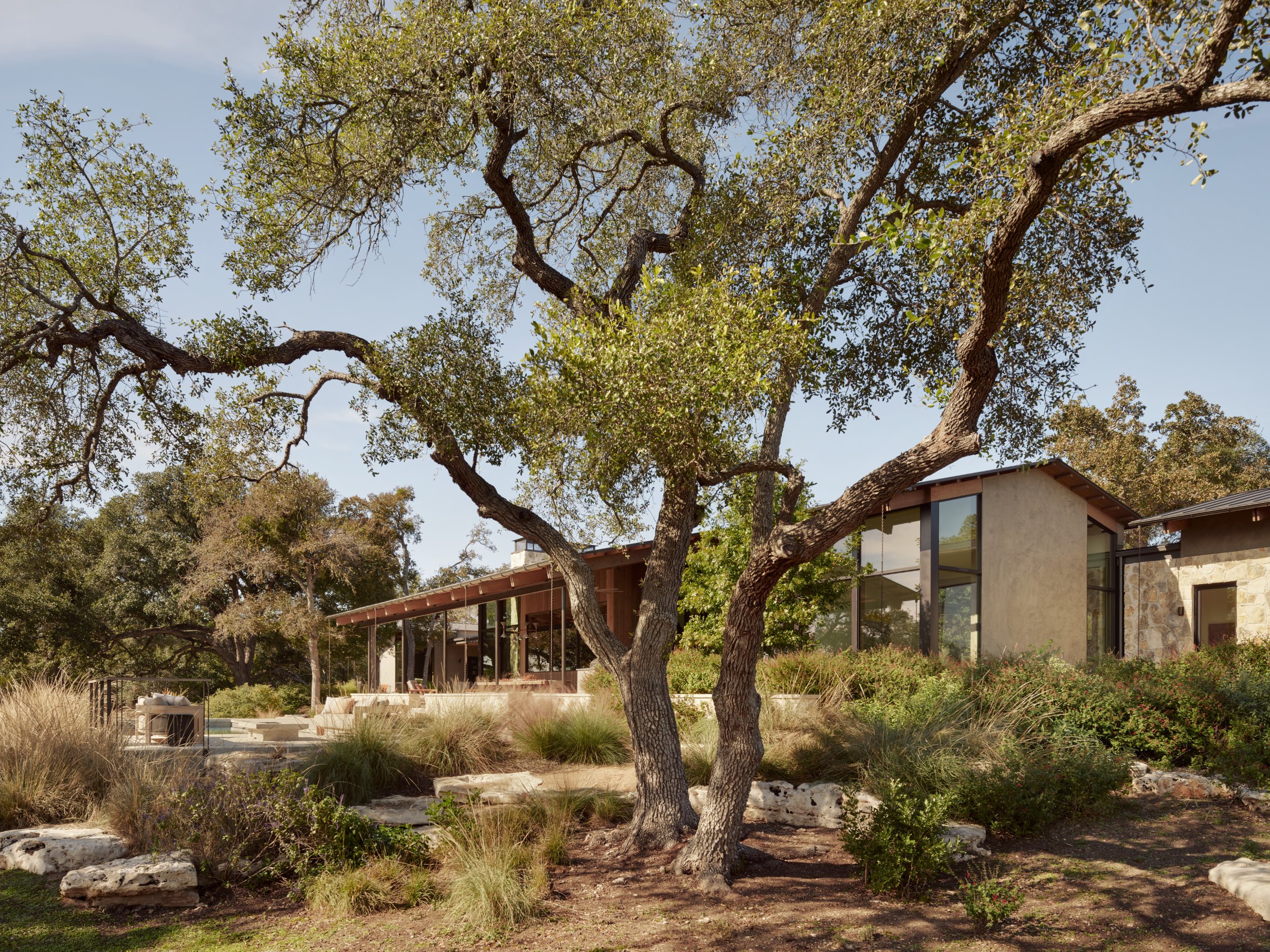
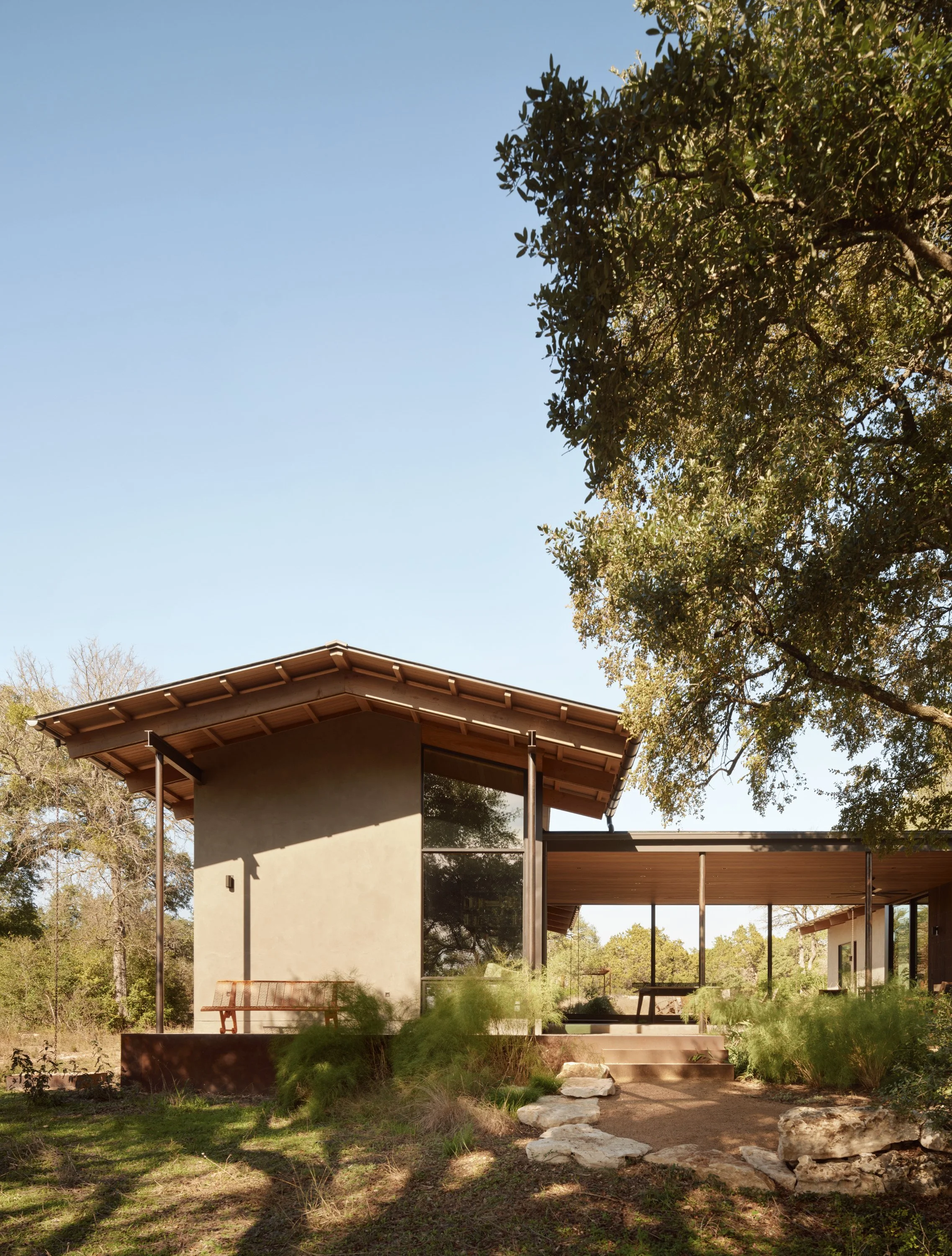
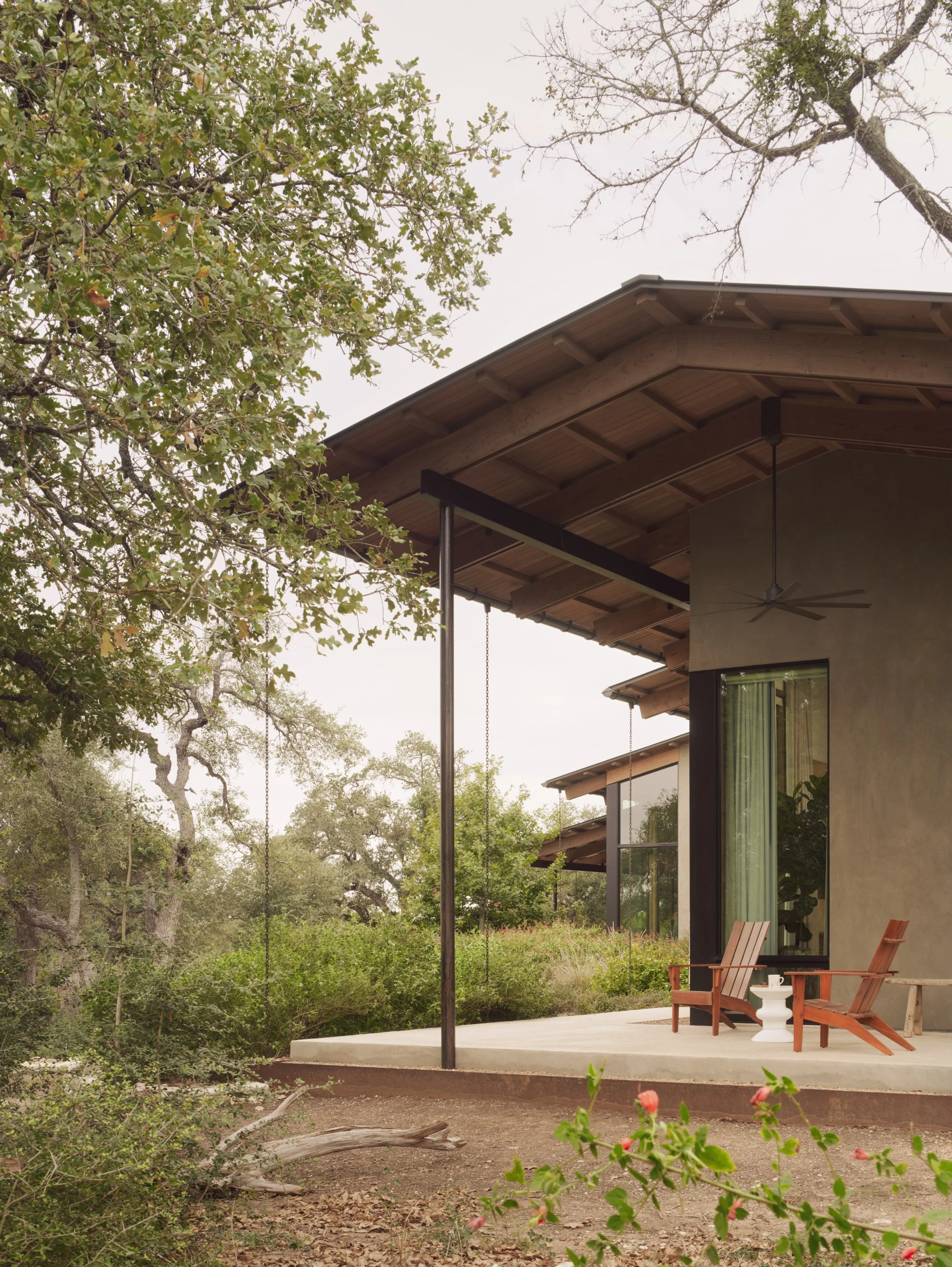
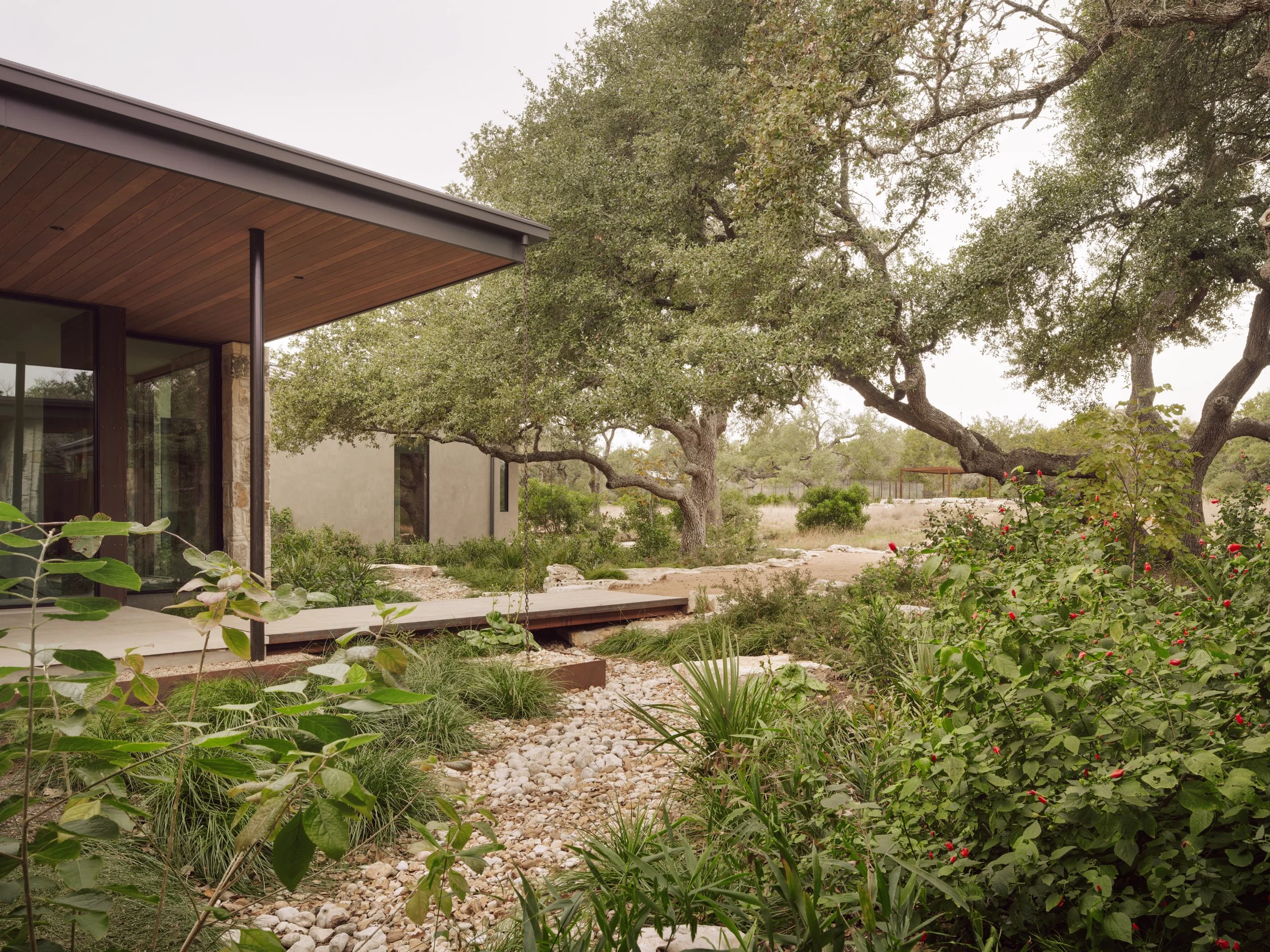
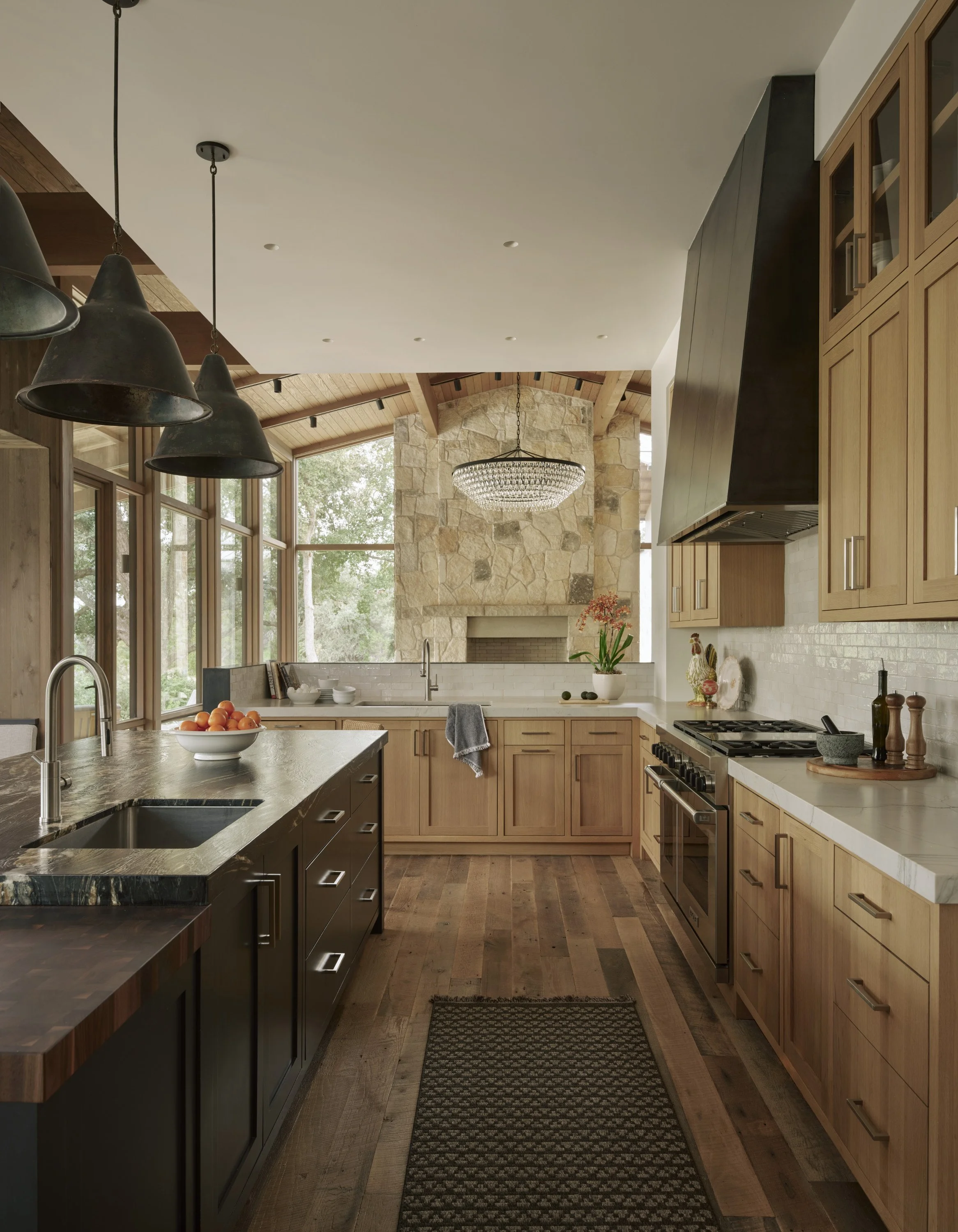
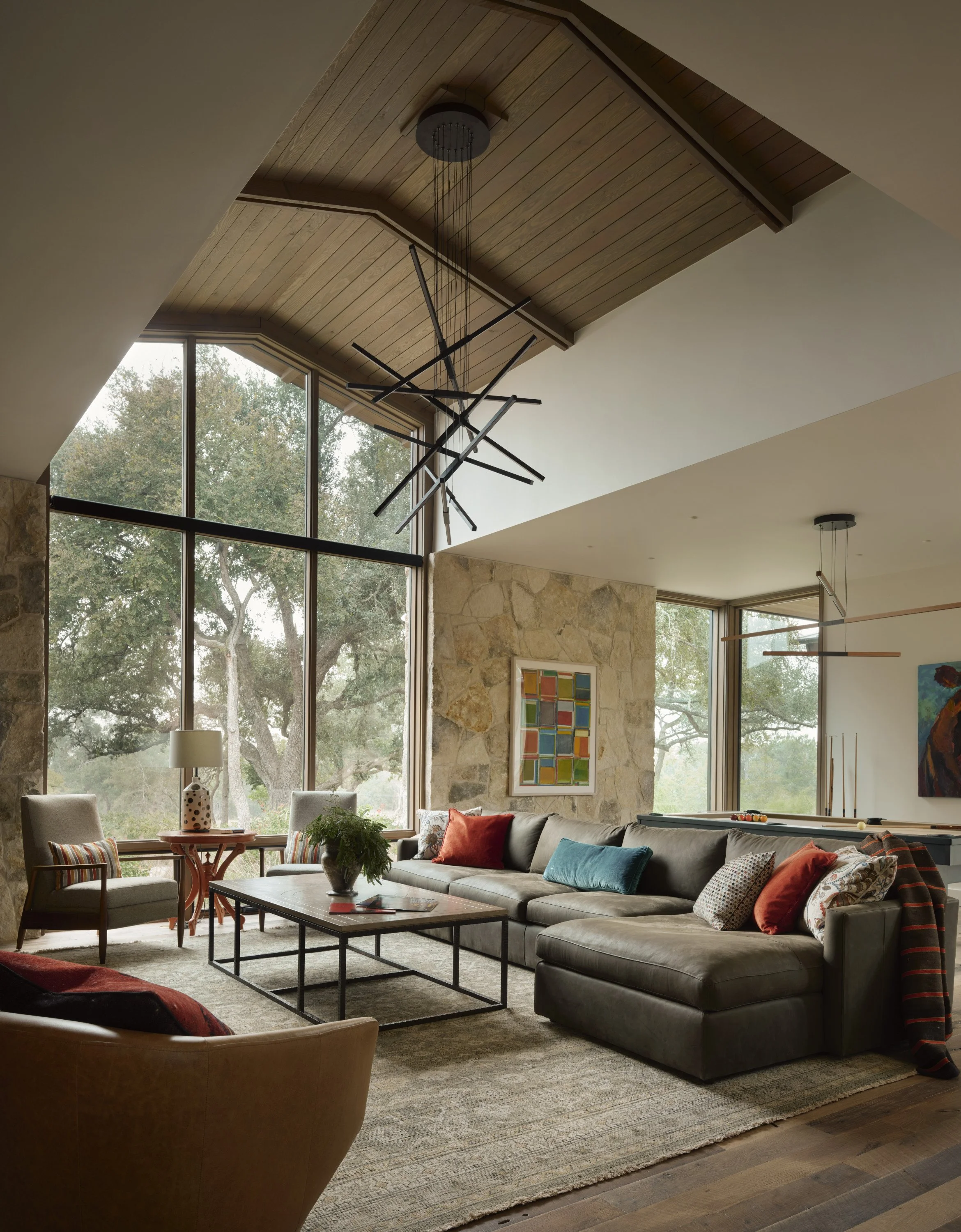
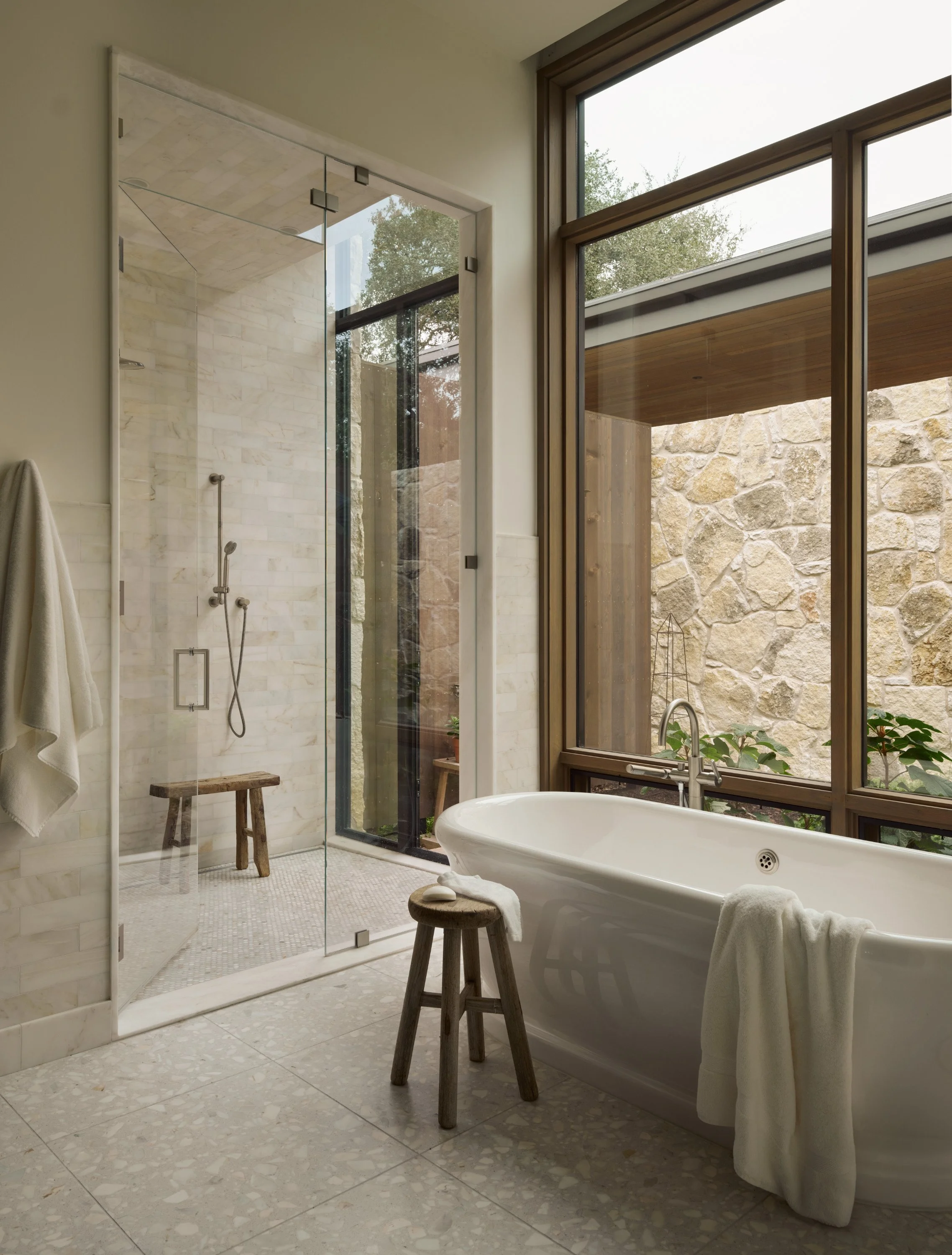
This land serves as the backdrop for the owners’ homecoming to Texas, who returned after raising their four children on the west coast. Their modern ranch home is designed to create an intimate connection to that landscape, leaving the impression that the ancient live oak trees grew up around the house instead of the other way around. The homestead siting within the larger property was selected for its specific offerings – a gentle southern slope with long views to the horizon, natural clearings for outdoor activities and a shady grove for protected views. Building volumes were kept narrow to allow them to thread between the trees, and exterior courtyards between rooms allow the landscape to permeate the interiors. Long walls of local limestone run in an east-west orientation to mimic rock outcroppings found on the site, and are punctuated with large windows framing intentional views to courtyards and trees. Tent-like metal roofs with exposed wooden structure provide deep shade and protection from the hot Texas sun.
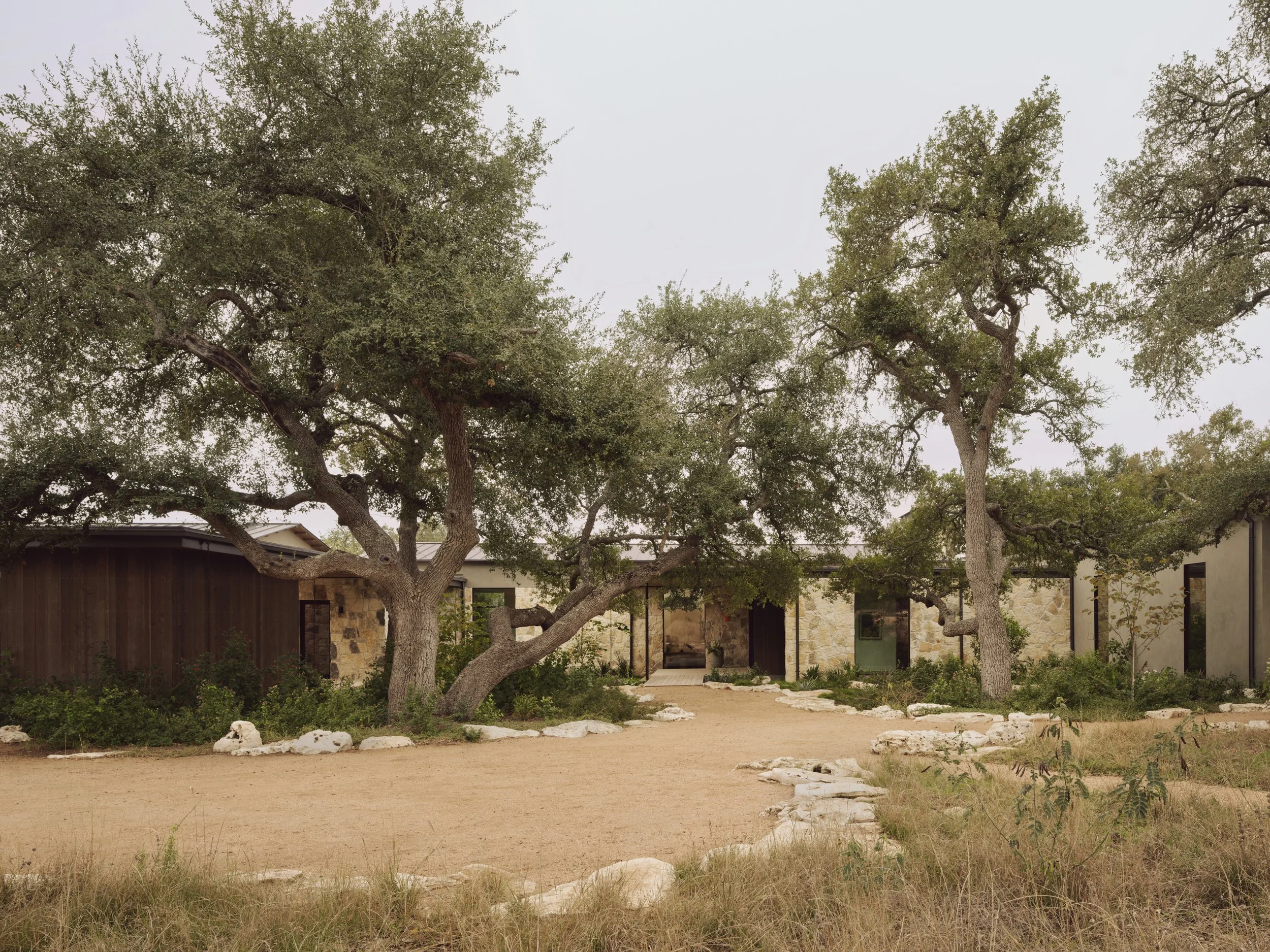
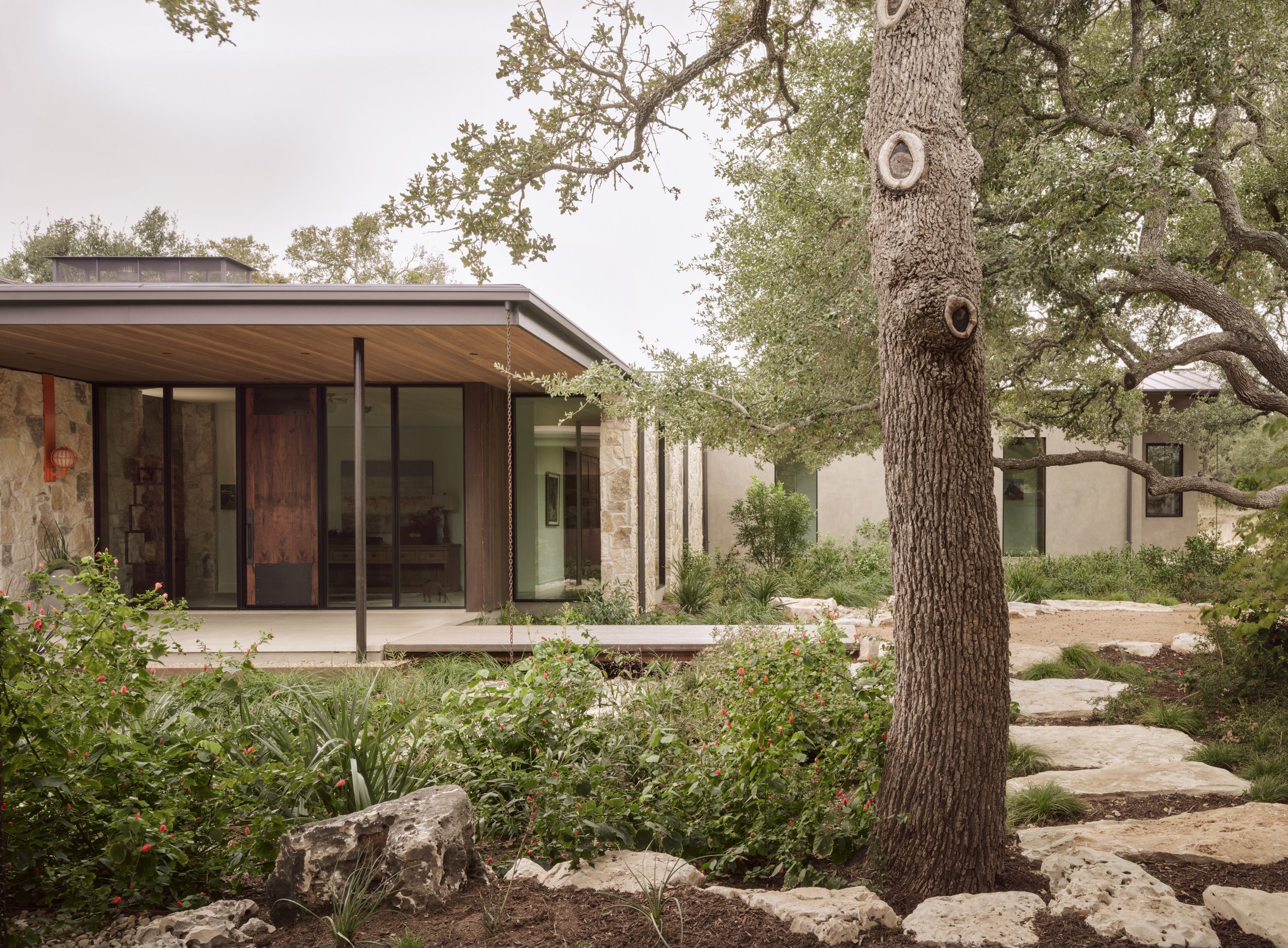
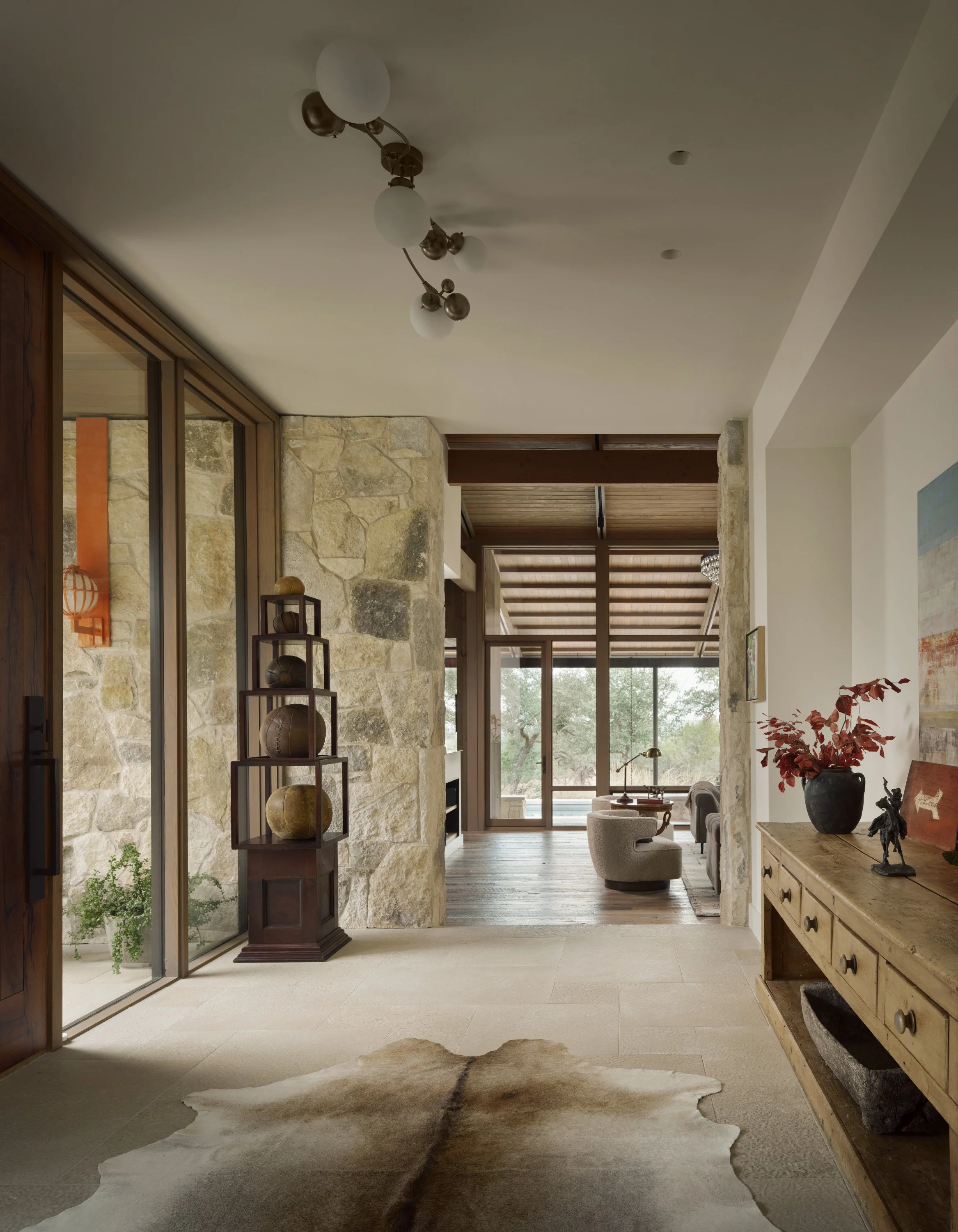
One arrives at the house along a winding ranch road through a wild-grass meadow. The crunch of gravel announces visitors, who are often greeted by the owner’s rescue dogs. A stand of stately trees dubbed “sentry oaks” guard the entry courtyard, leading to an unexpectedly modern glass entry vestibule and into the central spine of the house. The central volume of the house contains the living room, dining, kitchen, and a large south-facing porch. Separate wings to the east and west contain the less public family activities and sleeping quarters.
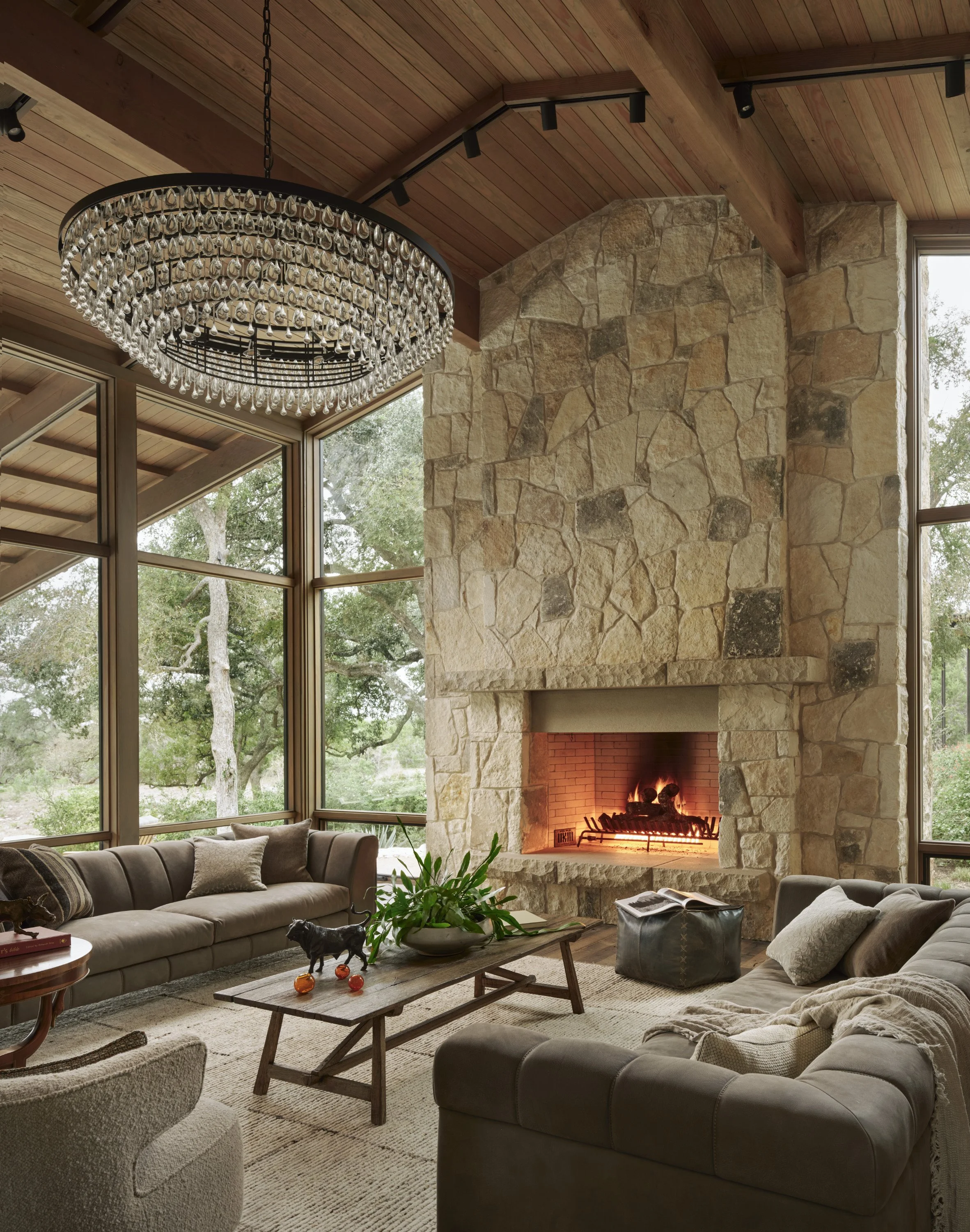
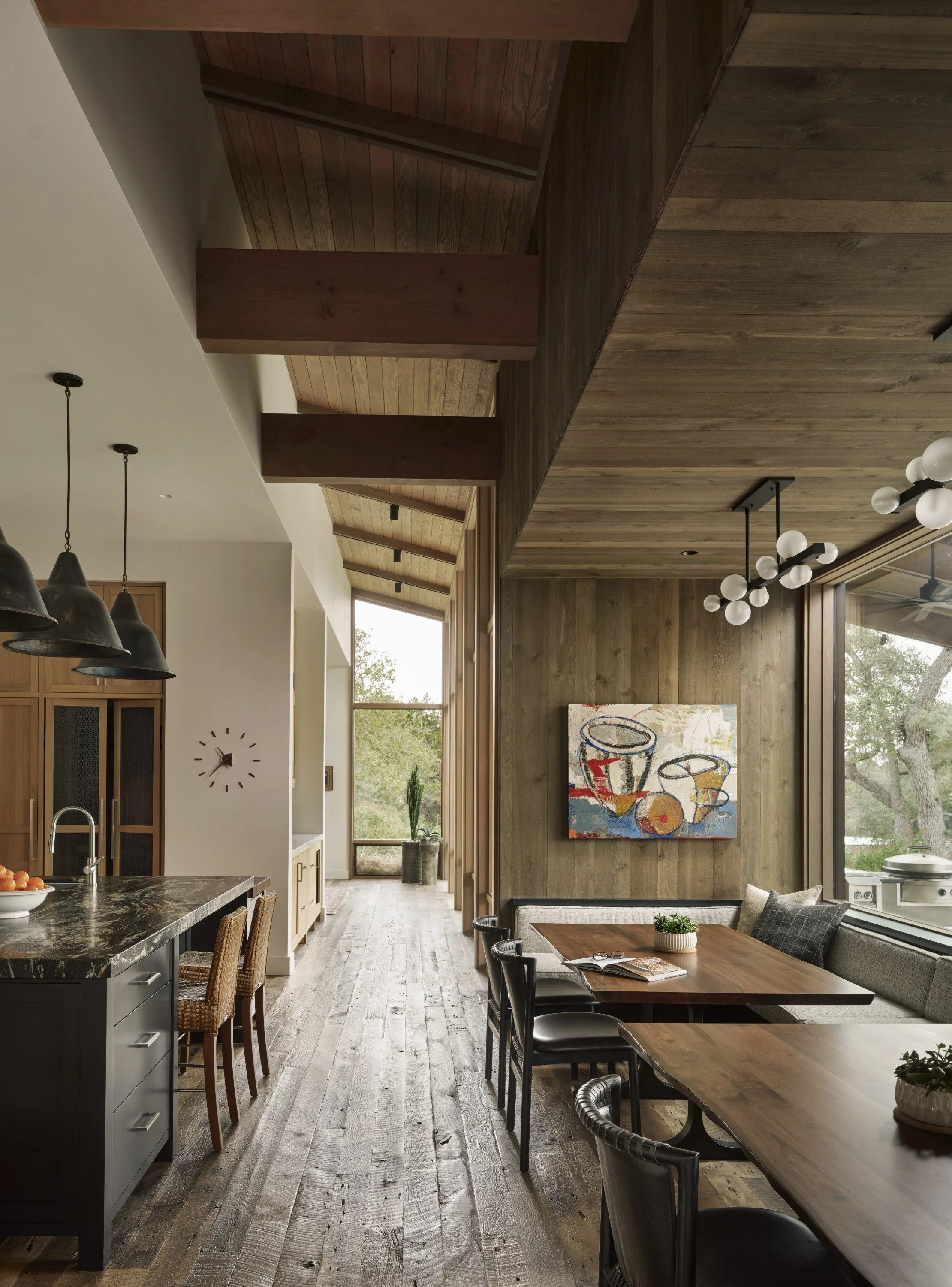
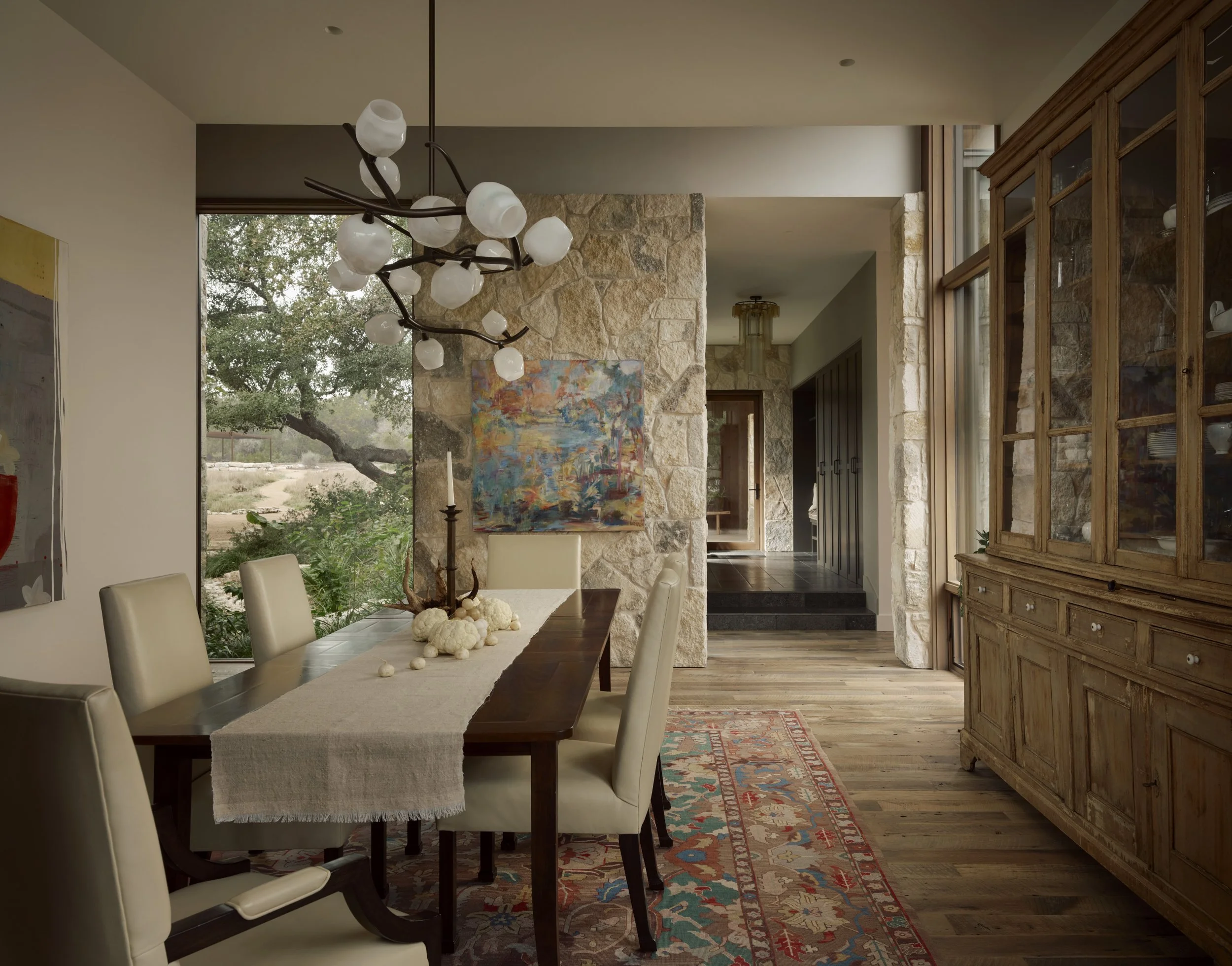
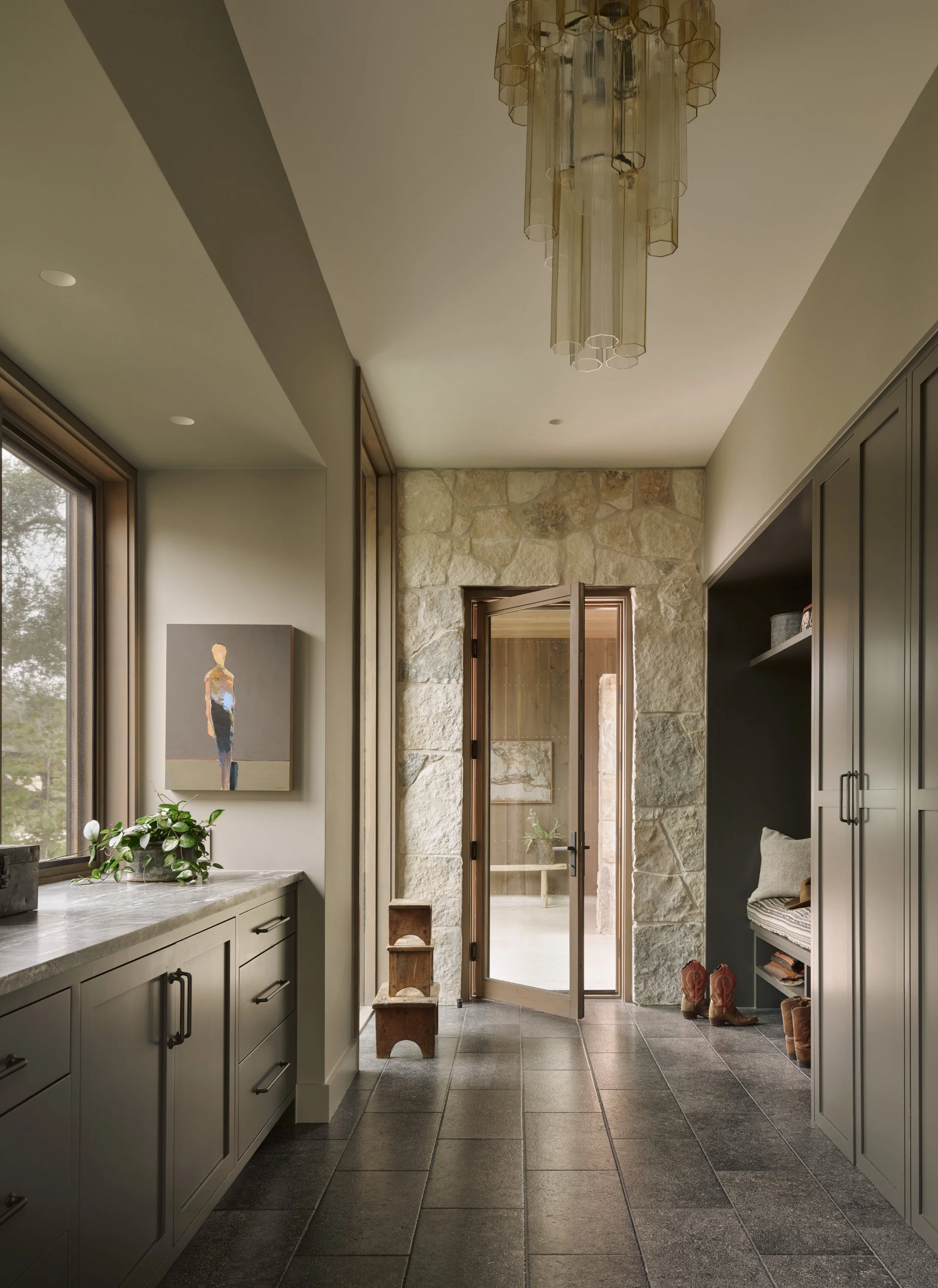
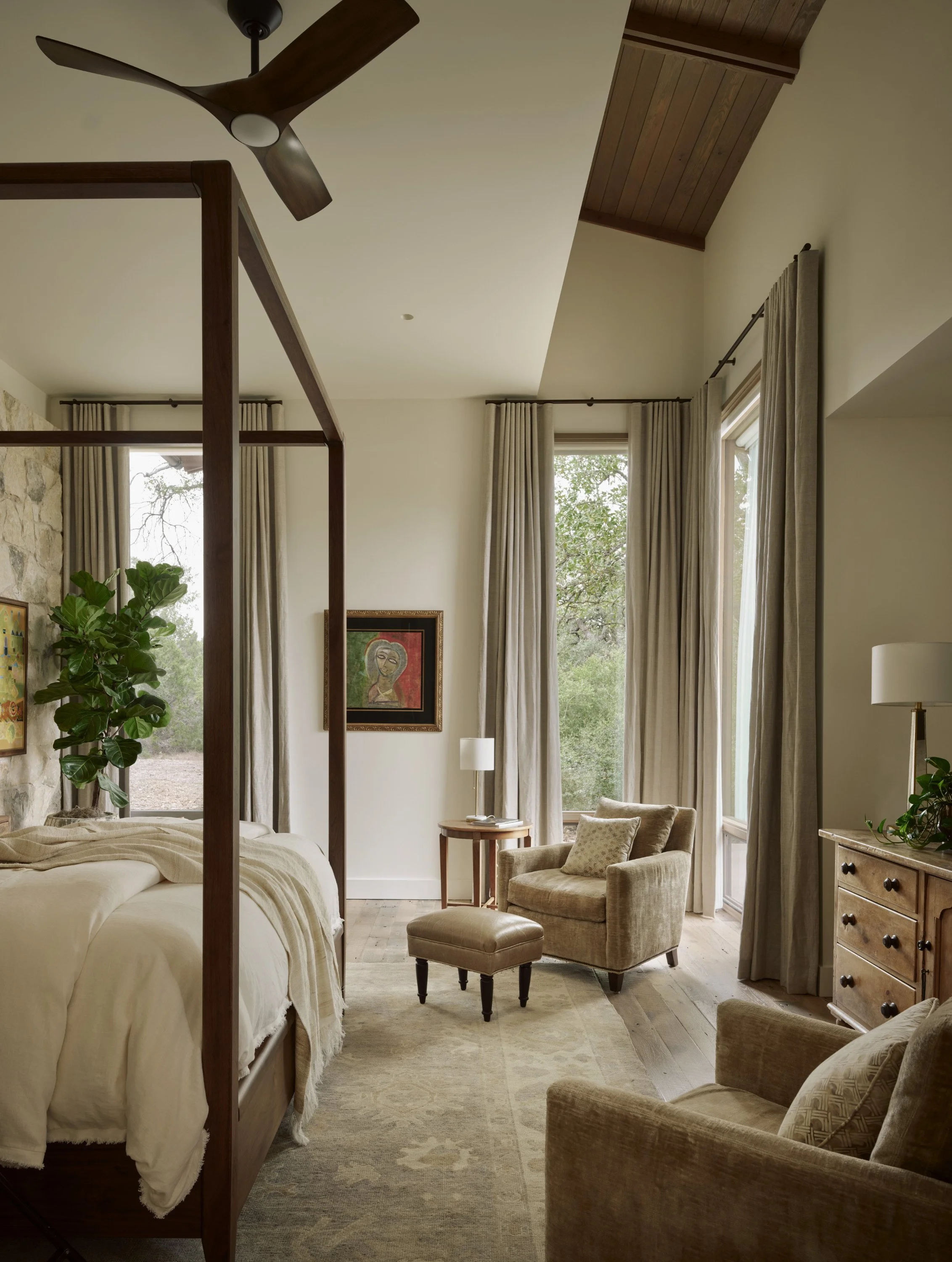
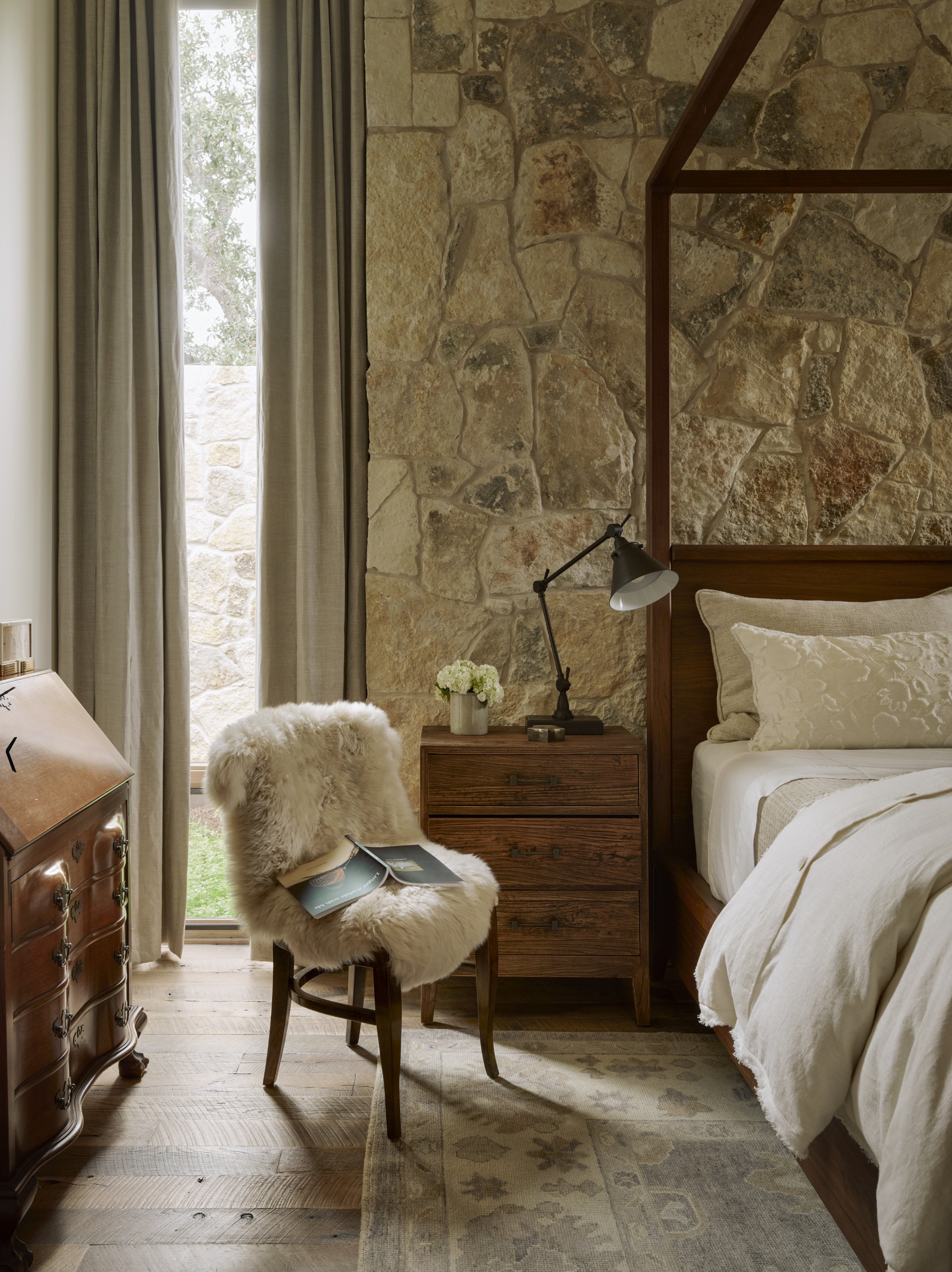
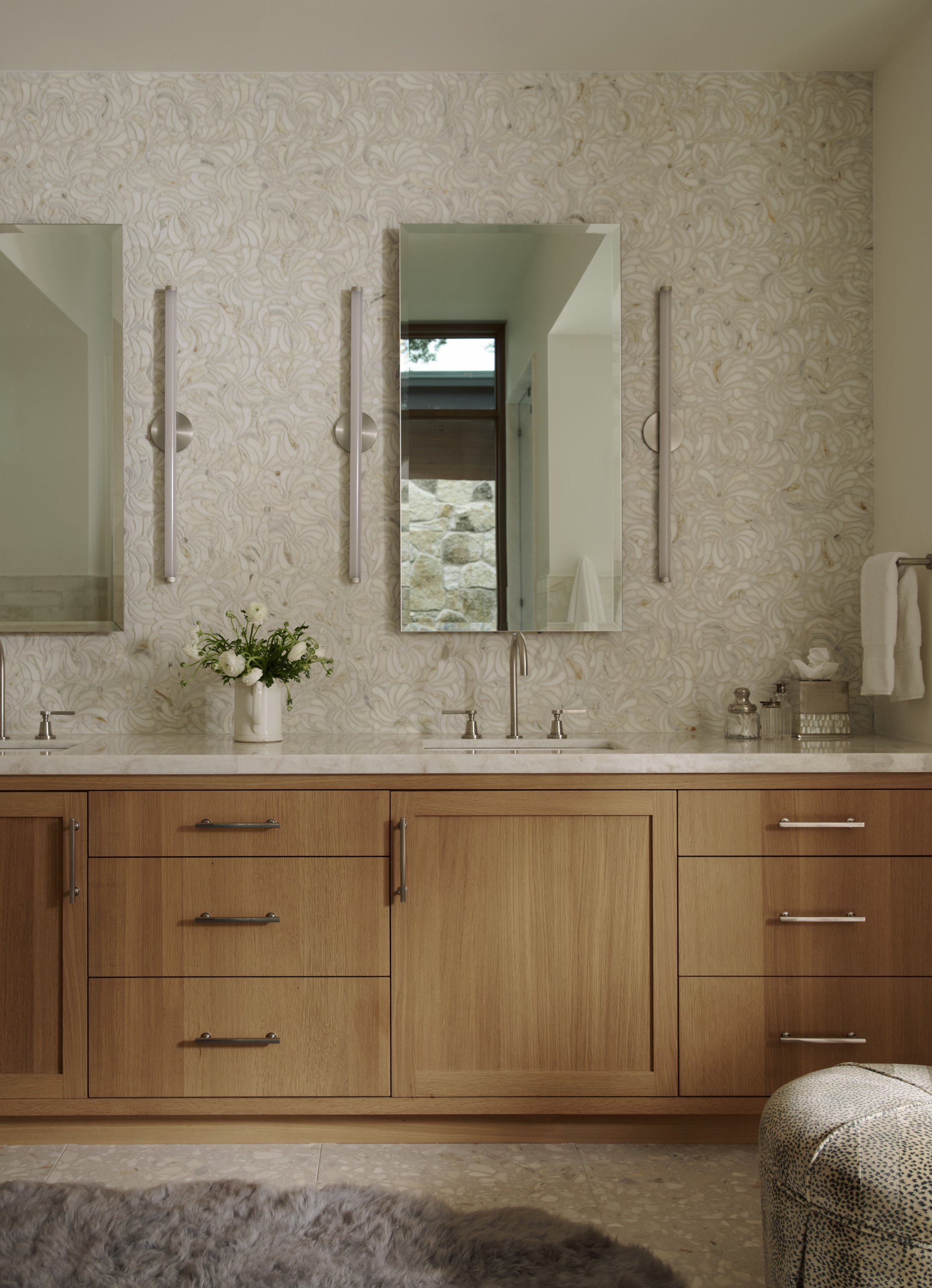
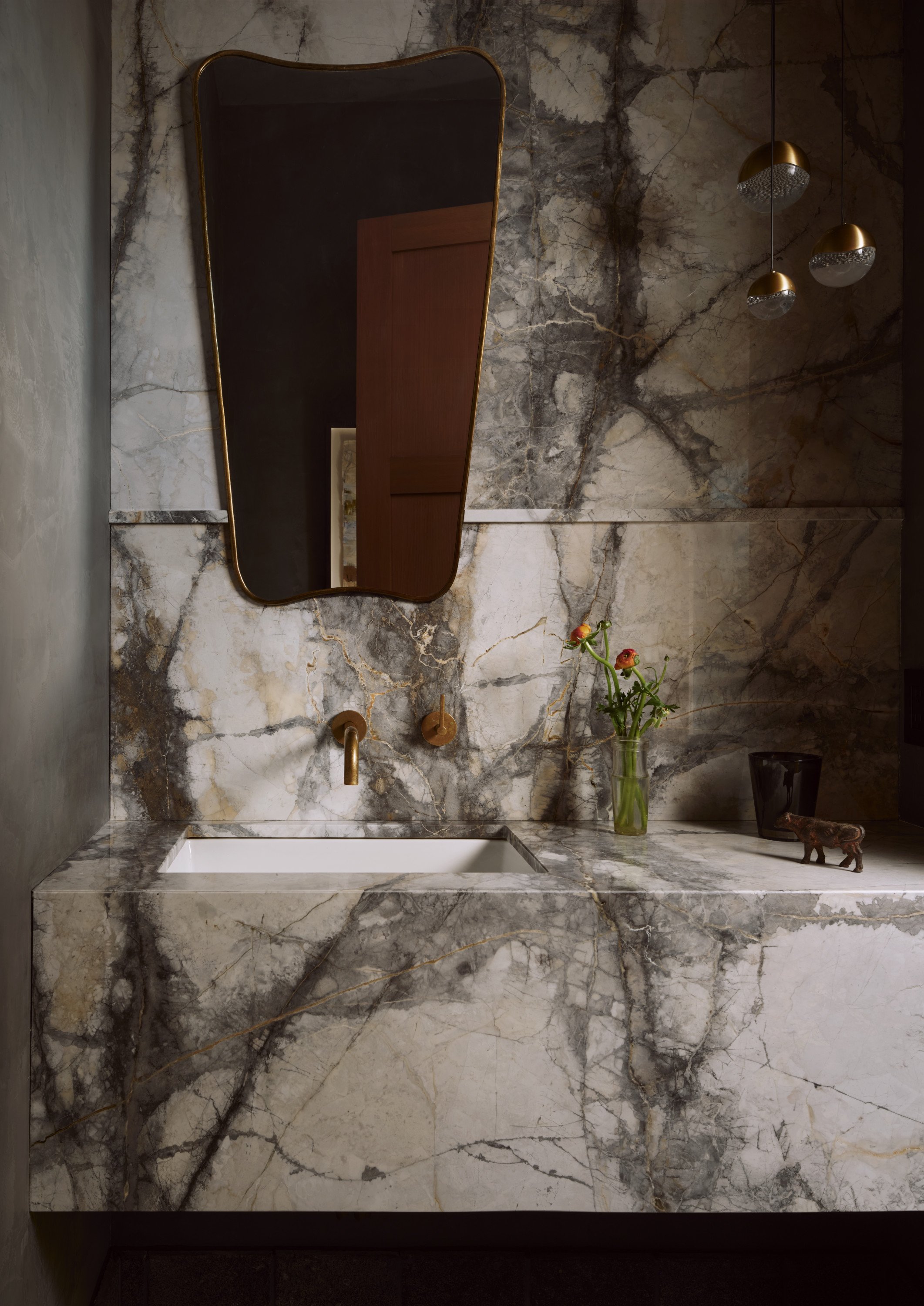
The limestone, wood, and glass material palette of the architecture was kept intentionally neutral, setting the stage for an interior style that mixes modern sensibilities with an eclectic collection of art and antiquities, many of which were curated from the nearby Round Top Antiques Fair over the years. In the living room a Civil War-era cupboard with original paint sits comfortably alongside a pair of modern Italian leather sofas. Name brand textiles share space with 100-year-old hand woven linen. A collection of oddly-shaped turn of the century ironstone pieces sits amongst the owner’s art collection. Found objects from the surrounding land fill the dining room cupboard next to the owners wedding china.
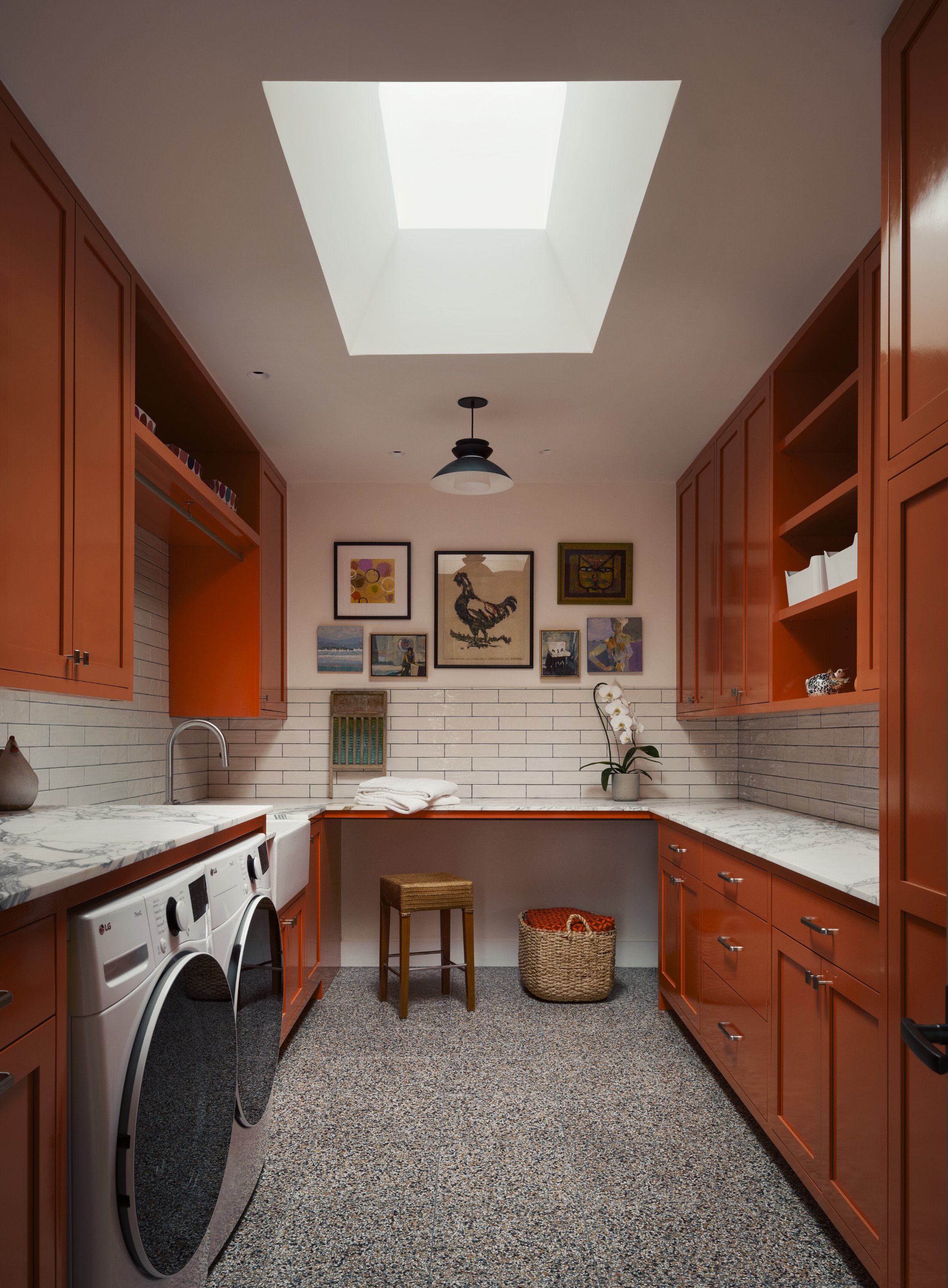
Throughout the home, reclaimed wood flooring and subtle nods to ranch‑style furnishings add warmth and character, mingling modern silhouettes with family heirlooms and storied pieces from around the world. Bright orange details (the owner’s favorite color) pop up around the house as a common thread to tie the pieces together, helping to tell the unique story of the people who live in this special place.
Recognition: